Gelagen › Blog › Methylcobalamin At 6 mcg: Why A B12 Figure Of 250% Is Not What Gets Absorbed
Gelagen long readMethylcobalamin At 6 mcg: Why A B12 Figure Of 250% Is Not What Gets Absorbed
A percentage of a reference intake and an amount absorbed are two different quantities, and for B12 the gap between them is unusually wide.
What 250 per cent is a percentage of
The Gelagen panel prints vitamin B12 as methylcobalamin, 6 mcg, and beside it a Daily Value of 250 per cent. The arithmetic is simple. The reference intake for adults is 2.4 mcg a day, and 6 divided by 2.4 is 2.5. The figure compares what is in two gummies with a reference number, and that is all it does.
It is easy to hear more in it than that. A person reading “250%” tends to picture two and a half days of B12 arriving in the body, and the word “absorbed” is not on the label, which is exactly the point of this piece. Vitamin B12 has one of the most unusual absorption systems of any nutrient, and it is built so that the fraction you absorb falls as the amount you swallow rises. A large printed percentage and a large absorbed amount are two different quantities, and the gap between them is bigger for B12 than for almost any other line on the panel.
None of this makes the 6 mcg a bad amount. As the sections below show, it sits in a range that nutrition research treats as sensible. The aim here is to say what the figure is and is not, so that the number is read for what it is.
How B12 gets in, and why it is capped
Most nutrients cross the gut wall by a route with plenty of capacity. B12 does not. It is bound in the stomach and small intestine to a carrier called intrinsic factor, and the complex is then taken up at a specific receptor in the last part of the small intestine. A 2013 review in Biochimie describes it in these terms: under physiological conditions, vitamin B12 bound to gastric intrinsic factor is internalised in the ileum by a highly specific receptor complex of cubilin and amnionless. Every step in that sequence is a protein doing a job, and a protein has a finite number of hands.
The consequence is a limit on how much can go through that route in one go, with a second, much weaker route running in parallel. A 2025 paper in The Journal of Nutrition built a physiologically based pharmacokinetic model of B12 absorption to capture this. It describes absorption as occurring through the intrinsic factor pathway at physiological intakes, supplemented by passive diffusion at pharmacological doses. In the model, cubilin-mediated uptake was the rate-limiting step of the intrinsic-factor route. The paper reports simulated absorption percentages for single oral doses of 1, 2 and 1000 mcg of 83, 63 and 1 per cent respectively, and describes those as within the expected range.
That is a simulation and not a measurement, and it should be quoted as one. But the three numbers make the shape of the curve visible. Multiply them out: 1 mcg at 83 per cent is about 0.8 mcg absorbed, 2 mcg at 63 per cent is about 1.3 mcg, and 1000 mcg at 1 per cent is about 10 mcg. A thousandfold rise in the dose produced roughly a tenfold rise in the amount absorbed, and nearly all of that came from the second route. The proportion falls at every step, and that is the sense in which a B12 percentage on a label does not translate into an absorbed percentage.
A 6 mcg intake falls between the model’s 2 mcg and 1000 mcg points, and the paper’s abstract does not state a figure for it. I have therefore not invented one. What the curve supports is a direction: at 6 mcg the fraction absorbed will be lower than at 2 mcg, and the total will be higher.
What happens without the pathway
The best evidence that the intrinsic-factor route matters comes from people who lack it. A 2005 study in Clinical Chemistry developed a B12 absorption test using three oral doses of 9 mcg, six hours apart, and then measured the vitamin in the blood 24 hours later. Seventeen patients with inherited malabsorption, from Imerslund-Gräsbeck syndrome or intrinsic factor deficiency, showed no significant change in holo-transcobalamin or in cobalamin after the load. The authors describe that as consistent with a lack of measurable active or passive absorption. Forty-four healthy controls did show increases, and so did the patients’ parents, who carry one copy of the fault.
Twenty-seven micrograms in total is a good deal more than the 6 mcg on this label, and in people missing the pathway it produced nothing the test could detect. It is a striking result, and it is worth keeping in proportion: the study is about a rare inherited condition, and it was a test of the method, not of supplements. What it shows is that the ordinary absorption of B12 at these amounts runs almost entirely through one system, and that when the system is intact, this dose range is absorbed and detectable.
Where 6 mcg sits
Given a capped system, the sensible question is whether 6 mcg is a sensible size. The best available help comes from a study of diet. A 2010 paper in The American Journal of Clinical Nutrition estimated the dietary B12 intake of 299 healthy men and women aged 18 to 50 in a Florida community and measured a panel of B12 status markers in their blood, including plasma cobalamin, holo-transcobalamin, methylmalonic acid and homocysteine. The intake ranged from 0.42 to 22.7 mcg a day. All the markers appeared to level off at a daily intake between 4.2 and 7.0 mcg, and the authors concluded that in people with normal absorption 4 to 7 mcg a day is associated with adequate status, which suggests that the current 2.4 mcg Recommended Dietary Allowance might be inadequate for optimal biomarker status even in a healthy population.
The catch is that this is observational. Intake was estimated from a questionnaire, the people were young and healthy, and the B12 in food is bound to protein, which is not how a supplement supplies it. It shows where markers plateau, not what any given person needs. Still, it makes 6 mcg look like a considered size rather than an exaggerated one, and it makes the 250 per cent a less alarming number. The figure is high against a reference value that some researchers think is on the low side.
| Amount | Where it comes from | What it tells you |
|---|---|---|
| 2.4 mcg a day | The adult reference intake (RDA) | The yardstick behind the 250 per cent on this label. |
| 4.2 to 7.0 mcg a day | Where blood markers levelled off in 299 healthy adults | The range that contains the 6 mcg printed here. |
| 6 mcg per serving | The Gelagen panel | Two gummies, methylcobalamin. |
| 1000 to 2000 mcg a day | Oral doses in trials treating deficiency | A different job: overwhelming a failed pathway by passive diffusion. |
The second and fourth rows are studies cited below. Neither is a test of this product.
Methylcobalamin or cyanocobalamin
The label names the form, and the form is the first thing people ask about. Methylcobalamin is one of the two coenzyme forms of B12 the body uses, and it is marketed on that basis, as the “active” form. The plain question is whether it does anything a cheaper form does not.
A 2015 review in Molecular Nutrition & Food Research took the question through the biochemistry. The transport proteins bind and take up all the forms, and inside the cell a chaperone protein called MMACHC strips the cyanide from cyanocobalamin, or the methyl group from methylcobalamin, and feeds the same intermediate into the pathways that make both coenzymes. The authors conclude that supplementing methylcobalamin or adenosylcobalamin is unlikely to be advantageous compared with cyanocobalamin, and they name a case where a different form does have clear advantages, high parenteral doses of hydroxocobalamin in inborn errors of B12 metabolism.
A short 2015 commentary in the European Journal of Clinical Nutrition comes at it from the other side. It observes that methylcobalamin is being extensively used and promoted for treating deficiency, argues that both coenzyme forms have distinct roles, and suggests treating deficiency with a combination of methylcobalamin and adenosylcobalamin, or with hydroxocobalamin. It also notes that the oral route has been shown comparable to the intramuscular one.
Those two papers disagree about the details, and they agree about the important part: neither offers evidence that, in a person who absorbs B12 normally, methylcobalamin in a supplement outperforms the other forms. A reader should therefore treat “methylcobalamin” on this label as a fair, legitimate form and not as the reason the number is safe to rely on. The form does not change the ceiling on how much crosses the gut wall, and that ceiling is the topic of this piece.
Who has trouble absorbing it
Because absorption runs through a chain of steps, the people who have trouble are those with a break in the chain. The published evidence names a few groups clearly.
Older adults
A 2009 review in The American Journal of Clinical Nutrition reports that in large United States and United Kingdom surveys about 6 per cent of people aged 60 or older are B12 deficient, with prevalence rising with age, and closer to 20 per cent have marginal status. In older people the predominant cause is malabsorption of food-bound B12, at least in part because of gastric atrophy, though the author says it is likely that most elderly people can absorb the vitamin from fortified food. That last point matters for a supplement, because a supplement’s B12 is not bound to food protein.
People taking metformin
A 2016 analysis of the Diabetes Prevention Program Outcomes Study compared people randomised to metformin with people randomised to placebo. Low B12, defined as 203 pg/mL or less, was more common with metformin at five years (4.3 against 2.3 per cent) but the difference was not significant at thirteen years. Low plus borderline-low B12, 298 pg/mL or less, was more common on metformin at both five years (19.1 against 9.5 per cent) and thirteen years (20.3 against 15.6 per cent). Each year of metformin use was associated with an odds ratio of 1.13 for B12 deficiency.
People taking acid-suppressing medicine
A 2013 case-control study in JAMA compared almost 26,000 people with a new diagnosis of B12 deficiency with about 184,000 without. Two or more years’ supply of proton pump inhibitors was associated with an odds ratio of 1.65 for deficiency, and of histamine 2 receptor antagonists with 1.25. Higher daily doses of proton pump inhibitors were associated with a larger effect. It is an association in a large health-system database, and it cannot prove that the drugs caused the deficiency, but it is consistent with the mechanism, since stomach acid helps release B12 from food.
If you fall into any of these groups, the sensible move is to raise it with the person who prescribes your medicine or looks after your health, because a blood test can tell you what your status actually is. A gummy cannot, and neither can a printed percentage.

Gelagen
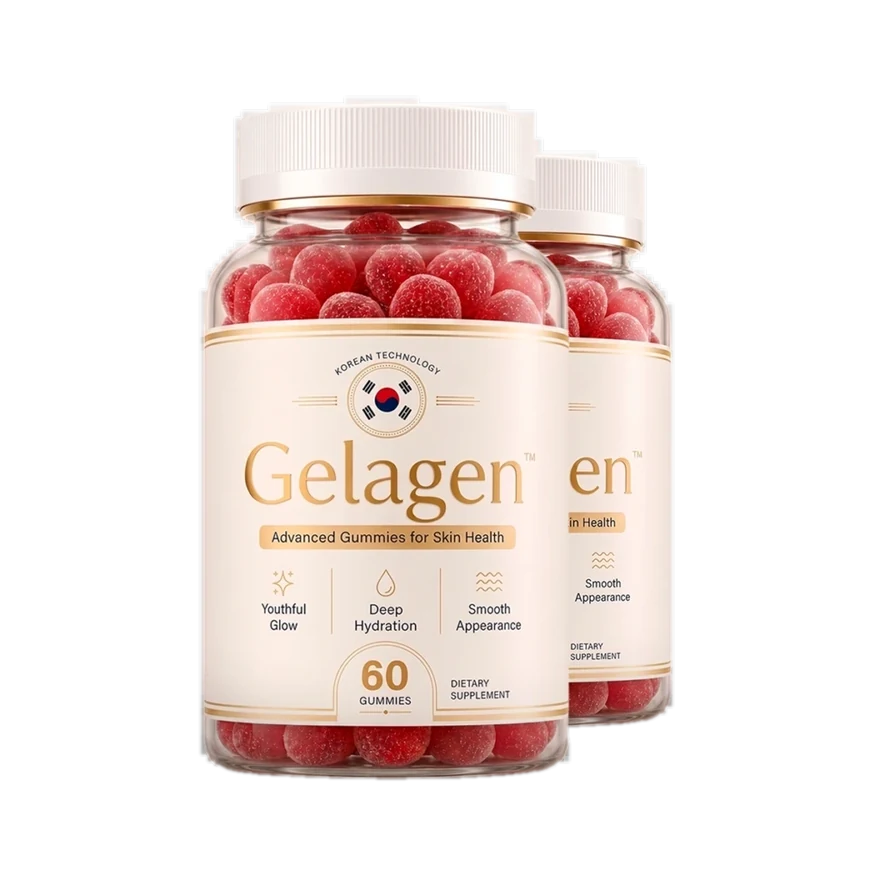
The panel prints vitamin B12 as methylcobalamin, 6 mcg per two-gummy serving, alongside twelve other amounts.
Order GelagenWhat treating a deficiency actually looks like
A deficiency is a different situation from a top-up, and the gap in doses shows it. A 2018 Cochrane review of oral against intramuscular B12 for deficiency found three randomised trials with 153 participants in all. In two of them, oral doses of 1000 mcg a day produced no clinically relevant difference in serum B12 compared with injections, and in one a dose of 2000 mcg a day did better. The review rates the quality of that evidence as low, because of the small number of trials and participants, and it was clear that no trial measured signs and symptoms.
Those doses are between roughly 170 and 330 times the amount on this label. They work, when they work, because a large enough swallowed dose overwhelms the failed pathway by the passive route the 2025 model puts at about one per cent. That is a medical treatment for a diagnosed problem. It does not describe what 6 mcg does, and the label makes no claim that it does.
A 2008 article in Blood on managing B12 deficiency adds the clinical view. Its central principles are that clinically important deficiency is more likely to occur, and to progress, when intrinsic factor-driven absorption fails than when the diet is poor, and that most causes take years to produce obvious deficiency. The key management principle, it says, is follow-up, which requires knowing how the deficiency arose. In other words, the useful question about B12 is usually why a level is low, and a supplement does not ask it.
What this line does not claim
The panel’s B12 entry makes no claim about skin, hair or nails, and this piece makes none either. B12 is essential to blood formation and to the nervous system, which is why deficiency is taken seriously. The step from that to a cosmetic benefit in a person with normal status is not one the sources above take, and it is not one that the seller’s product supports with a trial: the seller publishes no trial of the finished product.
Gelagen is a vitamin and mineral gummy sold for skin, hair and nails. It is not a treatment for B12 deficiency, which is a diagnosable condition with several possible causes. Anyone who takes metformin or acid-suppressing medicine, is an older adult, or has symptoms such as unexplained fatigue or tingling should speak to a clinician about a blood test rather than rely on a supplement.
What to do with the number
- Read 250 per cent as a comparison to a reference intake of 2.4 mcg, not as a delivered dose.
- Remember that the fraction absorbed falls as the amount rises, so more is not proportionally more.
- Treat methylcobalamin as a legitimate form, not as evidence of better absorption; the reviews cited here found no such advantage.
- If you are an older adult, take metformin or an acid-suppressing drug, or follow a diet with little animal food, ask about a blood test rather than assuming a supplement covers it.
Six micrograms of methylcobalamin is a reasonable amount that sits inside the range where B12 markers plateau, but the 250 per cent describes the product against a reference and not the amount your gut takes up, which is a small fraction of it.
The other rows have their own stories. The vitamin E line is a question of form, the vitamin C line is a question of dose, and the thirteen-amounts piece puts all of them side by side.
Sources
- Kozyraki R, Cases O. Vitamin B12 absorption: mammalian physiology and acquired and inherited disorders. Biochimie. 2013;95(5):1002-1007. https://pubmed.ncbi.nlm.nih.gov/23178706/
- Zhang M, Almond LM, Jones HM. Physiologically Based Pharmacokinetic Modeling of Vitamin B-12 Incorporating Mechanistic Absorption: An Example Application for Intake Estimation During Pregnancy. J Nutr. 2025;155(10):3220-3228. https://pubmed.ncbi.nlm.nih.gov/40750040/
- Bor MV, Cetin M, Aytaç S, Altay C, Nexo E. Nonradioactive vitamin B12 absorption test evaluated in controls and in patients with inherited malabsorption of vitamin B12. Clin Chem. 2005;51(11):2151-2155. https://pubmed.ncbi.nlm.nih.gov/16166166/
- Bor MV, von Castel-Roberts KM, Kauwell GP, Stabler SP, Allen RH, Maneval DR, Bailey LB, Nexo E. Daily intake of 4 to 7 microg dietary vitamin B-12 is associated with steady concentrations of vitamin B-12-related biomarkers in a healthy young population. Am J Clin Nutr. 2010;91(3):571-577. https://pubmed.ncbi.nlm.nih.gov/20071646/
- Obeid R, Fedosov SN, Nexo E. Cobalamin coenzyme forms are not likely to be superior to cyano- and hydroxyl-cobalamin in prevention or treatment of cobalamin deficiency. Mol Nutr Food Res. 2015;59(7):1364-1372. https://pubmed.ncbi.nlm.nih.gov/25820384/
- Thakkar K, Billa G. Treatment of vitamin B12 deficiency-methylcobalamine? Cyancobalamine? Hydroxocobalamin?-clearing the confusion. Eur J Clin Nutr. 2015;69(1):1-2. https://pubmed.ncbi.nlm.nih.gov/25117994/
- Allen LH. How common is vitamin B-12 deficiency? Am J Clin Nutr. 2009;89(2):693S-696S. https://pubmed.ncbi.nlm.nih.gov/19116323/
- Aroda VR, Edelstein SL, Goldberg RB, Knowler WC, Marcovina SM, Orchard TJ, Bray GA, Schade DS, Temprosa MG, White NH, Crandall JP; Diabetes Prevention Program Research Group. Long-term Metformin Use and Vitamin B12 Deficiency in the Diabetes Prevention Program Outcomes Study. J Clin Endocrinol Metab. 2016;101(4):1754-1761. https://pubmed.ncbi.nlm.nih.gov/26900641/
- Lam JR, Schneider JL, Zhao W, Corley DA. Proton pump inhibitor and histamine 2 receptor antagonist use and vitamin B12 deficiency. JAMA. 2013;310(22):2435-2442. https://pubmed.ncbi.nlm.nih.gov/24327038/
- Wang H, Li L, Qin LL, Song Y, Vidal-Alaball J, Liu TH. Oral vitamin B12 versus intramuscular vitamin B12 for vitamin B12 deficiency. Cochrane Database Syst Rev. 2018;3(3):CD004655. https://pubmed.ncbi.nlm.nih.gov/29543316/
- Carmel R. How I treat cobalamin (vitamin B12) deficiency. Blood. 2008;112(6):2214-2221. https://pubmed.ncbi.nlm.nih.gov/18606874/
More about Gelagen
Order Gelagen
Thirteen printed amounts and two gummies a day.
$79 down to $49 a bottle
Order Gelagen