Gelagen Official Website › Blog › Zinc And Copper: What 2.7 mg Does Not Reach
Gelagen long readZinc And Copper: What 2.7 mg Does Not Reach
Zinc has a documented relationship with copper status. This panel gives an honest, specific amount to test that relationship against — and no copper line at all.
Two minerals, one line missing
The Gelagen Supplement Facts panel prints thirteen rows. One of them is Zinc, listed at 2.7 mg per two-gummy serving, next to a Daily Value of 25 per cent. Nowhere on that panel is a line for copper. That is not unusual for a beauty gummy — plenty of skin, hair and nail formulas leave copper out entirely — but it is a genuinely interesting thing to notice, because zinc and copper have one of the better-documented mineral relationships in nutrition science, and some multivitamin formulas pair the two deliberately for exactly that reason.
This page is not a warning about that absence. It is an attempt to answer, with real numbers instead of a vague caution, whether it matters here. The short version: the interaction is real, the dose at which it has actually been measured is far above what this panel prints, and the honest way to read a mineral line with a gap in it is to check the dose before deciding the gap is a problem.
Where the interaction was actually measured
The reference point most often cited for zinc reducing copper status in otherwise healthy adults is a small controlled trial published in the American Journal of Clinical Nutrition in 1984. Fischer, Giroux and L’Abbé gave healthy adult men either two daily doses of 25 mg of zinc — 50 mg of zinc a day in total — or a placebo, for six weeks, and tracked copper status through two copper-dependent enzymes: plasma ferroxidase activity (ceruloplasmin) and erythrocyte Cu,Zn-superoxide dismutase.
Ceruloplasmin did not move. It was the red-cell enzyme that did: Cu,Zn-superoxide dismutase activity in the zinc group fell relative to the placebo group, and the difference became statistically significant at six weeks. The study's own conclusion was direct — that the zinc supplements decreased the copper status of the experimental group, measured through that one enzyme, at that dose, over that span of time.
That is the study behind the caution that shows up on multivitamin labels and in pharmacist advice sheets: high-dose zinc, taken for weeks, can measurably affect copper status in a healthy adult with no other risk factor. It is a real, specific, peer-reviewed finding, and it deserves to be taken exactly as seriously as it was measured — no more, and no less.
| Detail | What the trial reported |
|---|---|
| Population | Healthy adult men, no diagnosed deficiency |
| Dose | 50 mg of zinc a day (two 25 mg doses), or placebo |
| Duration | Six weeks |
| What moved | Erythrocyte Cu,Zn-superoxide dismutase activity, significant by week six |
| What did not move | Plasma ferroxidase (ceruloplasmin) activity, at any timepoint measured |
What 2.7 mg is against that number
Gelagen's panel prints 2.7 mg of zinc per two-gummy serving. The trial that demonstrated a measurable copper effect used 50 mg a day. Divide one into the other and the gap is close to nineteen-fold: this label's daily zinc amount is roughly a nineteenth of the dose a six-week controlled trial needed before a copper-dependent enzyme moved in healthy men.
Put another way using the panel's own arithmetic: 2.7 mg is 25 per cent of the FDA Daily Value for zinc, a reference figure built around ordinary nutritional adequacy, not around the doses used in mineral-interaction research. A Daily Value tells you what share of an average adult's daily requirement one serving supplies. It was never designed to answer a pharmacology question about a 50 mg research dose, and reading it as though it were is where a lot of supplement-label anxiety starts.
None of this is an argument that no amount of zinc can ever affect copper status. Reviews of zinc metabolism describe it as what nutrition scientists call a type 2 nutrient — one involved in broad metabolic housekeeping rather than one specific function, which is part of why its interactions with other minerals show up gradually, at sustained higher intakes, rather than at a single sharp threshold. What the available evidence does support is a distinction between a nutritional maintenance amount and a research or therapeutic amount, and 2.7 mg sits on the nutritional side of that line by a wide margin.
| Figure | What it is |
|---|---|
| 2.7 mg | What this panel prints per two-gummy serving (25% of the FDA Daily Value) |
| ~11 mg | The FDA Daily Value for zinc used to calculate the panel's percentage column |
| 50 mg/day | The dose used in the 1984 trial that measured a copper-status effect |
The gap between the first row and the third is the entire point of this page. This site is not aware of a published trial testing a 2.7 mg daily zinc dose against copper status specifically, and does not claim one exists.
Gelagen on the official website
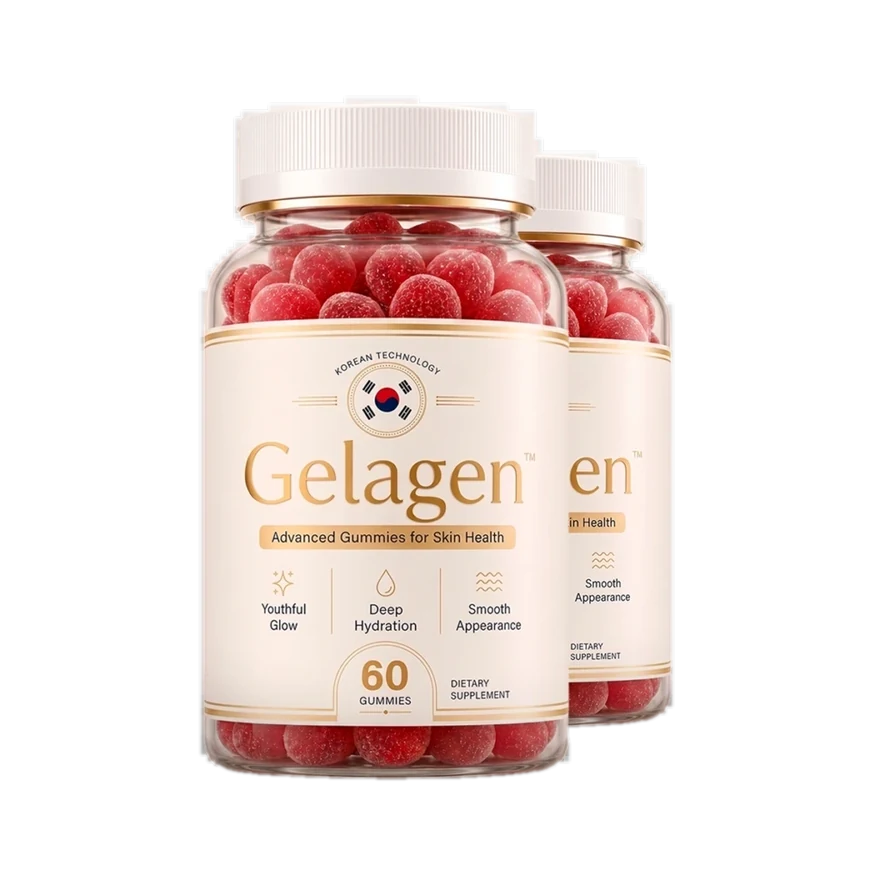
The panel prints zinc at 2.7 mg beside twelve other amounts, each one an exact figure rather than a blend total.
Order GelagenWhy zinc crowds out copper at all
The mechanism is worth understanding in outline, because it explains why the effect needs sustained, higher intake rather than a single serving to show up. Zinc and copper are absorbed through overlapping pathways in the small intestine. When intestinal cells encounter more zinc than usual, they respond by producing more of a small cysteine-rich protein called metallothionein. Metallothionein binds metals indiscriminately within a family that includes both zinc and copper, and it has a higher binding affinity for copper. Reviews of zinc metabolism describe metallothionein, and the small pool of zinc bound to it, as part of the body's short-term buffer against fluctuating zinc intake — the same protein that buffers zinc is the one that, at higher zinc intakes, traps copper inside intestinal cells that are shed and lost with normal gut lining turnover days later, rather than letting that copper reach the bloodstream.
That is a slow, cumulative process. It depends on sustained elevated zinc intake inducing more metallothionein than usual, over enough days that the resulting copper loss outpaces the body's ability to compensate. It is not a same-day, same-meal competition the way, say, calcium and iron can compete for absorption at a single meal. That is consistent with what the 1984 trial found: no effect at two weeks, an effect emerging by six.
- The pathway runs through metallothionein induction in the gut lining, not a single-meal competition.
- It needs sustained higher zinc intake, not one serving, to produce a measurable copper effect.
- The effect shows up first in enzyme activity, before any symptom would appear.
- It is dose- and duration-dependent, which is exactly why the number on a label matters more than the fact that zinc is on it at all.
What zinc's own literature says it is for
It is worth separating the copper question from the reason zinc is on a skin, hair and nails panel in the first place, because the two questions get blurred together more often than they should.
A comprehensive 2007 review of zinc in wound healing, published in Wound Repair and Regeneration, lays out the biology in some detail. Zinc acts as a cofactor for zinc-dependent matrix metalloproteinases, enzymes involved in clearing damaged tissue and supporting keratinocyte migration — the skin cells that resurface a healing wound. It also appears to protect epithelial cells against oxidative stress, partly through the antioxidant activity of those same cysteine-rich metallothioneins discussed above. Oral zinc supplementation, the review notes, showed benefit specifically in patients who were zinc-deficient leg ulcer patients — a group starting from an actual shortfall — while its role in surgical patients without a documented deficiency was described as needing further clarification. The same review found topical zinc formulations outperformed oral ones for direct wound-surface effects, since a cream or paste delivers the mineral straight to the site rather than through general circulation.
That is a genuinely useful, specific literature, and it is also a literature about wound healing and diagnosed deficiency, not a demonstrated general effect on skin radiance or nail strength in adults who are not short of zinc to begin with. The biochemistry — a cofactor role in tissue-repair enzymes and an antioxidant function tied to the same metallothionein system that governs the copper interaction — is the honest reason zinc belongs on a panel built around skin, hair and nails. Whether 2.7 mg, well under both the interaction-trial dose and the deficiency-correction doses discussed in that review, produces a noticeable effect in someone who already eats an ordinary mixed diet is a separate question this page is not going to answer for you, because the review it is drawn from was not designed to answer it either.
| Claim | What the evidence shows |
|---|---|
| Zinc is a cofactor in tissue-repair enzymes | Yes, in zinc-dependent matrix metalloproteinases active during wound repair |
| Zinc protects skin cells from oxidative stress | Described mechanistically, tied to metallothionein antioxidant activity |
| Oral zinc helps zinc-deficient leg ulcer patients | Yes, in that specific deficient population |
| Oral zinc helps non-deficient adults with cosmetic skin goals | Not what this review tested |
The same review is also specific about delivery route, which matters for reading any oral gummy's claims against it. It describes zinc oxide paste bandages, the kind used in an Unna boot dressing for leg ulcers, as delivering zinc through the skin directly to the wound bed while producing only insignificant systemic effects — the opposite direction from an oral serving, which travels through digestion and general circulation before any of it reaches skin, hair follicles or nail matrix at all. A topical formulation and a 2.7 mg oral serving are simply answering different questions, and the review's strongest clinical evidence sits with the topical route and with deficient patients, not with healthy adults taking an oral maintenance amount.
Reading a mineral line with a hole in it
Three questions turn a bare mineral line into something you can actually judge, instead of either dismissing it or worrying about it on instinct.
- What is the dose, not just the ingredient? “Zinc is in it” and “2.7 mg of zinc is in it” are different facts. The interaction research above is about a dose nearly twenty times higher than this one.
- What is the dose relative to research, not just to the Daily Value? A Daily Value answers a nutritional-adequacy question. A mineral-interaction question needs the actual trial dose for comparison, which is why this page names 50 mg rather than stopping at 25 per cent.
- Is the missing nutrient a real gap or an ordinary omission? Copper is not absent from this label because of an oversight discussion this site has evidence of — it is simply not one of the thirteen ingredients the formulator chose to print. Multivitamins built for long-term, higher-dose zinc use often pair the two minerals; a beauty gummy printing zinc at a quarter of the Daily Value is a different kind of product with a different reason to include it.
There is also a duration question worth carrying forward from the trial itself. The 1984 result did not appear at two weeks; it took six weeks of daily 50 mg dosing before erythrocyte Cu,Zn-superoxide dismutase activity separated from the placebo group. That timeline matters for anyone comparing this panel to a much higher-dose zinc product bought separately, such as a cold-remedy lozenge or a standalone zinc tablet taken for weeks at a time: the relevant question is not just the number on any single label, but the combined daily total across everything being taken, sustained over a period measured in weeks rather than days. A 2.7 mg gummy added to an otherwise ordinary diet is a very different addition than a 2.7 mg gummy added on top of a separate high-dose zinc supplement taken for the same stretch of time.
None of that changes the arithmetic this page opened with. It only sharpens the question a reader should actually be asking, which is not whether this product contains zinc without copper, but what the full daily zinc total is from everything a person takes, and how that total compares with the dose a trial has actually tested. For this product on its own, taken at the printed serving, the answer this page can give is a specific one: 2.7 mg is a fraction of 50 mg, and no published trial this site is aware of has tested a dose this low against copper status at all.
Zinc genuinely can reduce copper status, a 1984 controlled trial showed it at 50 mg a day over six weeks, and this panel prints roughly a nineteenth of that amount. That gap, not the absence of a copper line by itself, is the actual answer to whether it matters here.
Zinc is one of thirteen printed amounts on this panel, and it is worth reading beside the others rather than alone. All thirteen are set against their reference intakes here, and the ingredients page reproduces the panel in label order.
Sources
- Fischer PW, Giroux A, L'Abbé MR. Effect of zinc supplementation on copper status in adult man. Am J Clin Nutr. 1984;40(4):743-746. https://pubmed.ncbi.nlm.nih.gov/6486080/
- King JC. Zinc: an essential but elusive nutrient. Am J Clin Nutr. 2011;94(2):679S-684S. https://pubmed.ncbi.nlm.nih.gov/21715515/
- Lansdown AB, Mirastschijski U, Stubbs N, Scanlon E, Agren MS. Zinc in wound healing: theoretical, experimental, and clinical aspects. Wound Repair Regen. 2007;15(1):2-16. https://pubmed.ncbi.nlm.nih.gov/17244314/
- Gelagen Supplement Facts panel, as reproduced on this website. https://gelagendaily.com/supplement-facts.html
Order Gelagen on the official website
Thirteen printed amounts, two gummies a day, and 60 days from the date of purchase to decide.
$79 down to $49 a bottle · money back for 60 days after you buy
Order Gelagen On The Official WebsitePaid at the seller’s checkout · 60-day money-back guarantee · lot GEL-26/GE-6615