Gelagen Official Website › Blog › Why The “D-” In This Label’s Vitamin E Matters
Gelagen long readWhy The “D-” In This Label’s Vitamin E Matters
One lowercase letter in front of “alpha tocopheryl acetate” tells you which of two different ingredients is actually in the gummy, and most panels never explain why it is printed at all.
What this label actually prints
The Gelagen Supplement Facts panel lists Vitamin E on its own row, per two-gummy serving, exactly like this: 7.4 mg, form printed as d-alpha tocopheryl acetate, 49 per cent of a day’s value. Every word of that row is reproduced from the printed label, in the label’s own order, and none of the three pieces of information in it is optional if you actually want to know what you are taking.
The amount, 7.4 mg, is the part most people read first and the part that tells you least on its own. The form, d-alpha tocopheryl acetate, is the part almost nobody reads, and it is the part that decides what 7.4 mg is actually worth. This page is about that second piece: the lowercase “d-” sitting in front of the ingredient name, what it is short for, what the alternative would have been, and why a panel that bothers to print it deserves credit most panels in this aisle do not.
The 49 per cent figure is calculated against the adult Reference Daily Intake of 15 mg of alpha-tocopherol a day, the same figure the thirteen-amounts breakdown on this site uses for every other row on the panel. That comparison is correct arithmetic and it is also where the story usually stops. It should not stop there, because 15 mg of the natural form and 15 mg of the synthetic form are not the same 15 mg.
Two letters, one molecule apiece
Alpha-tocopherol, the specific form of vitamin E the body actually uses, is built around a molecule with three points on its ring-and-tail structure where the chemistry can bend one of two possible ways. Each of those three points is called a chiral centre, and three independent two-way choices multiply out to eight possible three-dimensional shapes of the same molecular formula. All eight are technically “alpha-tocopherol.” Only one of them is the shape a plant actually makes.
A plant’s own enzymes build alpha-tocopherol in exactly one of those eight configurations, written in chemical shorthand as RRR-alpha-tocopherol. The everyday label shorthand for that same single, plant-made shape is the lowercase “d-” prefix: d-alpha-tocopherol, or, in the stabilised ester form most gummies and softgels actually use, d-alpha tocopheryl acetate. That is the form the Gelagen panel prints.
A factory making vitamin E from scratch, by contrast, cannot build only the one shape a leaf builds. The standard industrial synthesis produces all eight configurations at once, in roughly equal amounts, because the chemistry has no way to prefer one over the other seven. That eight-isomer mixture is written all-rac-alpha-tocopherol, and its everyday label shorthand is the “dl-” prefix: dl-alpha tocopheryl acetate. One in eight molecules in that mixture happens to be the same RRR shape a plant makes. The other seven-eighths are shapes no plant on earth produces.
- d-alpha tocopheryl acetate (this label) is the single, naturally occurring RRR shape, extracted from plant oils and stabilised as the acetate ester.
- dl-alpha tocopheryl acetate (a different, common label) is a laboratory-built mixture of all eight possible shapes, only one of which matches what a plant makes.
- Both are legally “vitamin E.” Both are legally “alpha tocopheryl acetate.” The prefix is the only place the difference survives onto the label.
None of this is a grading system where one letter is fraudulent and the other is honest. Both forms are permitted, both are common, and a synthetic dl- form is not a lesser vitamin E in any regulatory sense. It is a different ratio of the same eight molecules, and the difference matters for one specific reason: the body does not treat all eight shapes equally.
Where the potency gap comes from, in the government’s own numbers
The liver contains a protein built specifically to manage alpha-tocopherol traffic, called the alpha-tocopherol transfer protein. Its job is to pick alpha-tocopherol back up after the gut absorbs it, load it into the particles that carry fat through the bloodstream, and export it back out to the rest of the body. That protein is shaped to recognise the RRR configuration specifically. It binds the natural shape efficiently and exports it; it binds the other seven synthetic shapes far less efficiently, and the liver disposes of most of what it does not export.
That single mechanism is the entire reason a synthetic dl- mixture is not bioequivalent milligram for milligram to the natural d- form. It has nothing to do with how reactive the molecules are as antioxidants — in a test tube, all eight shapes neutralise free radicals about equally well. The gap opens later, at the liver, in which shapes get exported into the body and which get cleared out.
The federal government’s own reference values put a number on that gap, and it is worth reproducing exactly rather than rounding it into a slogan. The Linus Pauling Institute’s Micronutrient Information Center, summarising the Institute of Medicine’s own Dietary Reference Intake report, gives these two conversion factors for turning a supplement’s printed International Units into milligrams of biologically active alpha-tocopherol:
| Printed form | Conversion factor | What 30 IU on a label equals |
|---|---|---|
| RRR-alpha-tocopherol (natural, this label’s family) | IU × 0.67 = mg active | 20.1 mg |
| all-rac-alpha-tocopherol (synthetic, the dl- family) | IU × 0.45 = mg active | 13.5 mg |
Both rows describe the acetate ester forms as well as the free forms: the Institute states plainly that the acetate ester is absorbed and used at the same rate as the corresponding free tocopherol, so the same factors apply to d-alpha tocopheryl acetate and dl-alpha tocopheryl acetate.
Divide the two factors against each other — 0.67 against 0.45 — and the natural form delivers about 1.49 times the active alpha-tocopherol of the synthetic form for the same printed IU figure. That is the precise, sourced number, and it is smaller than the rounder “twice as potent” line that circulates in a lot of supplement marketing copy. Some of that rounding is not baseless: newer work on how the liver’s transfer protein actually discriminates between isomers has pushed a few researchers toward ratios closer to two-to-one, and food-labelling conventions in some jurisdictions round the comparison the same direction for simplicity. This page is printing the figure that is directly traceable to a single named government-adjacent source with an exact formula behind it, rather than picking whichever multiple sounds more dramatic.
Put in plain terms rather than IU arithmetic: the reason the gap exists at all is that seven of the eight molecules in a synthetic mixture are shapes the liver’s transfer protein does not hold onto well. Roughly one-eighth of a dl- dose is the same shape as a d- dose. The rest is cleared faster. A natural-form label is not a larger number wearing a costume; it is the same nutrient, built and kept by the body more efficiently, and the government’s own reference tables are the place that difference is written down in numbers rather than adjectives.

Gelagen, straight from the label
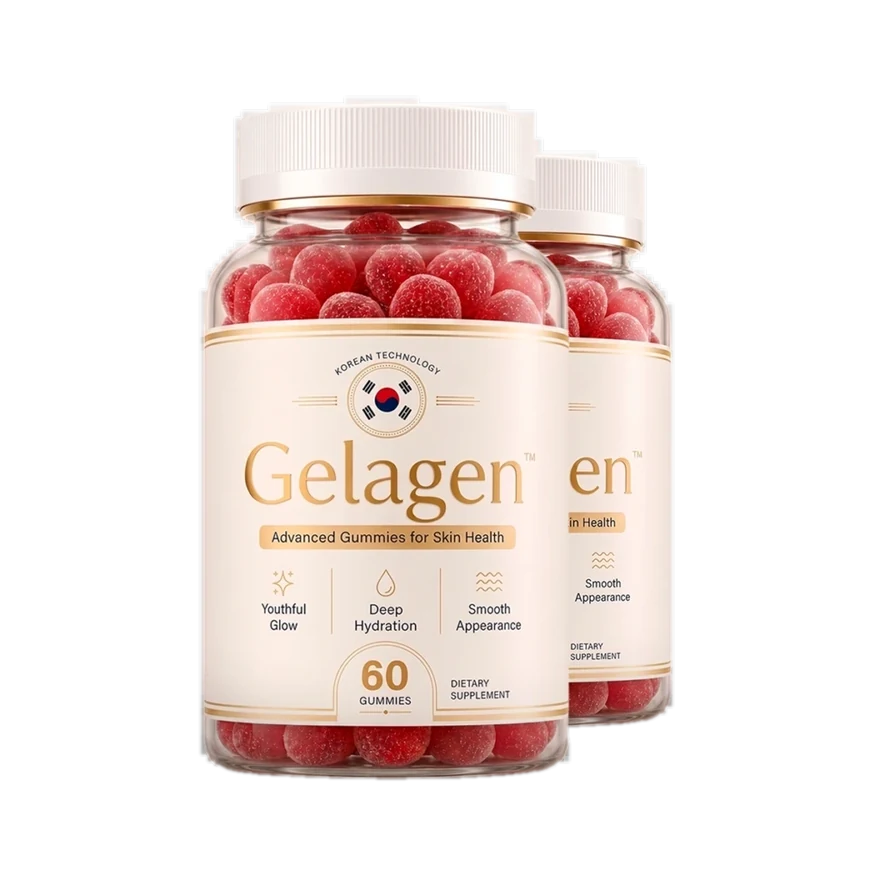
The Gelagen panel prints Vitamin E as d-alpha tocopheryl acetate, the natural-source form, at 7.4 mg per serving, and prints a form and an amount beside every one of the other twelve entries too.
Order GelagenReading the same letter on someone else’s label
Because the prefix is the only clue on a printed panel, reading it is a two-second habit rather than a research project. Three rules cover almost every label you will ever look at:
- “d-” with nothing after it is the natural, single-isomer form. d-alpha tocopherol, d-alpha tocopheryl acetate, and d-alpha tocopheryl succinate are all RRR-alpha-tocopherol in different stabilised shapes. This is what Gelagen prints.
- “dl-” is the synthetic, eight-isomer mixture. dl-alpha tocopherol and dl-alpha tocopheryl acetate are the all-rac form. Neither letter is hidden; both are printed in full on a compliant label, which is exactly why this is checkable on any bottle in five seconds.
- “mixed tocopherols” is a different question entirely. That phrase usually means a blend of the four tocopherol types — alpha, beta, gamma, delta — rather than eight isomers of one type, and the RDA and the IU conversions above are specific to alpha-tocopherol, not to the other three.
A label that omits the prefix entirely and prints only “Vitamin E” or “alpha tocopheryl acetate” with no letter in front of it has not told you which of the two ingredients is inside, and the two are not the same thing at the same weight. That omission is legal — nothing requires a manufacturer to print the prefix — but it is also the one piece of information a comparison between two vitamin E gummies actually needs and frequently does not get.
| What the label says | What it tells you |
|---|---|
| “7.4 mg, d-alpha tocopheryl acetate” | Natural-source form, single isomer. This is what Gelagen prints. |
| “7.4 mg, dl-alpha tocopheryl acetate” | Synthetic form, eight-isomer mixture, roughly two-thirds the active alpha-tocopherol of the same weight in natural form. |
| “7.4 mg, Vitamin E” (no prefix printed) | Unstated. The manufacturer is not required to say, and the two options above are not interchangeable. |
What the letter changes, and what it does not
It changes how two labels compare. A bottle printing 15 mg of dl-alpha tocopheryl acetate and a bottle printing 10 mg of d-alpha tocopheryl acetate are closer in delivered activity than the two headline numbers suggest, once the 0.67-versus-0.45 arithmetic runs. Reading the prefix, not just the milligram figure, is the only way to make that comparison honestly.
It does not change the Reference Daily Intake the label is measured against. The 15 mg adult reference figure used to calculate the Gelagen panel’s 49 per cent applies to alpha-tocopherol as a category; the form printed decides how efficiently a given dose is used, not what the target figure is.
It does not turn the synthetic form into something to avoid. The Tolerable Upper Intake Level the Food and Nutrition Board sets for vitamin E is 1,000 mg a day of alpha-tocopherol from any supplement source, natural or synthetic, and Gelagen’s 7.4 mg sits nowhere near that ceiling in either form. The distinction in this page is about efficiency and label literacy, not about safety.
This page explains a labelling convention and the government conversion factors behind it. It is not a claim that the natural form treats or prevents any condition, and vitamin E supplementation should not replace a clinician’s advice for anyone with a diagnosed deficiency or a condition that affects fat absorption.
The short version: two letters, printed in six-point type on the back of a bottle, are the only place a supplement panel tells you which of two different ingredients you are actually holding. Gelagen’s panel prints the natural one, and the government’s own conversion tables are what let anyone check that claim against any other bottle on the shelf.
“d-alpha tocopheryl acetate” and “dl-alpha tocopheryl acetate” are not the same ingredient at the same weight; the federal government’s own IU-to-mg conversion factors put the natural d- form at roughly one and a half times the active alpha-tocopherol of the synthetic dl- form, and the prefix is the only place a label says which one is inside.
The other twelve rows on this panel are printed the same exacting way. All thirteen amounts are set against their reference intakes here, and the ingredients page reproduces the full panel in label order.
Sources
- NIH Office of Dietary Supplements. Vitamin E: Fact Sheet for Health Professionals. https://ods.od.nih.gov/factsheets/VitaminE-HealthProfessional/
- Linus Pauling Institute, Oregon State University. Micronutrient Information Center: Vitamin E. https://lpi.oregonstate.edu/mic/vitamins/vitamin-E
- Institute of Medicine (US) Panel on Dietary Antioxidants and Related Compounds. Dietary Reference Intakes for Vitamin C, Vitamin E, Selenium, and Carotenoids. National Academies Press, 2000.
Order Gelagen on the official website
Thirteen printed amounts, two gummies a day, and 60 days from the date of purchase to decide.
$79 down to $49 a bottle · money back for 60 days after you buy
Order Gelagen On The Official WebsitePaid at the seller’s checkout · 60-day money-back guarantee · lot GEL-26/GE-6615