Gelagen Official Website › Blog › Biotin At 5,000 mcg: What The Number Means
Gelagen long readBiotin At 5,000 mcg: What The Number Means
It is the largest figure on most hair and nail panels, and almost nobody selling one explains what it is the size of.
What 5,000 mcg is the size of
Five thousand micrograms is five milligrams. It is the same quantity written two ways, and labels print the version with more digits in it, which is worth noticing before anything else.
The number that gives it a scale is the second one. The NIH Office of Dietary Supplements sets the Adequate Intake for adults at 30 micrograms a day, and the Daily Value used on labels is the same 30 micrograms. Five thousand against thirty is about one hundred and sixty-seven times a day’s worth, and that ratio is the first honest thing anyone can say about a panel like this one.
Dietary biotin arrives in eggs, nuts, seeds, liver and some vegetables. Deficiency is rare in people eating an ordinary mixed diet, and that matters more than it sounds: a nutrient you already have enough of behaves differently from one you are short of.

There is also no Tolerable Upper Intake Level for biotin, and the reason is specific rather than vague. The Food and Nutrition Board could not set one because there is no evidence in humans that biotin is toxic at high intakes. That is not an invitation to take a large amount. It says nobody has found harm at one, which is a weaker and more useful sentence than the version usually quoted from it.
So the figure is large, it is permitted, and there is no ceiling printed above it. None of that tells you what it does.
Why beauty panels carry so much
Biotin is a cofactor for the carboxylase enzymes, which the body uses to build fatty acids and to process certain amino acids. Both processes feed keratin, and keratin is what hair and nails are made of. The connection is real, and it is why biotin appears on very nearly every panel in this category.
A cofactor enables a step rather than driving it. Past the point where supply stops being the limiting factor, adding more does not make the step run faster, in the same way a second key does not open a door twice.
How the figure grew
Once one product printed a large biotin number, the next printed a larger one, and somewhere in that sequence the amount stopped being a dose and became a signal that the formulator was taking the category seriously. Reading it as a signal is the accurate way to read it, and it costs the label nothing it deserves: a signal printed as an exact figure is still a figure you can check, which is more than a proprietary blend offers.
- It is a cofactor, so it enables a step rather than driving it.
- It does the most where supply was short to begin with.
- It does not change the speed at which hair or nails grow.
- It is printed as an exact amount, which is what makes it arguable at all.

Gelagen on the official website
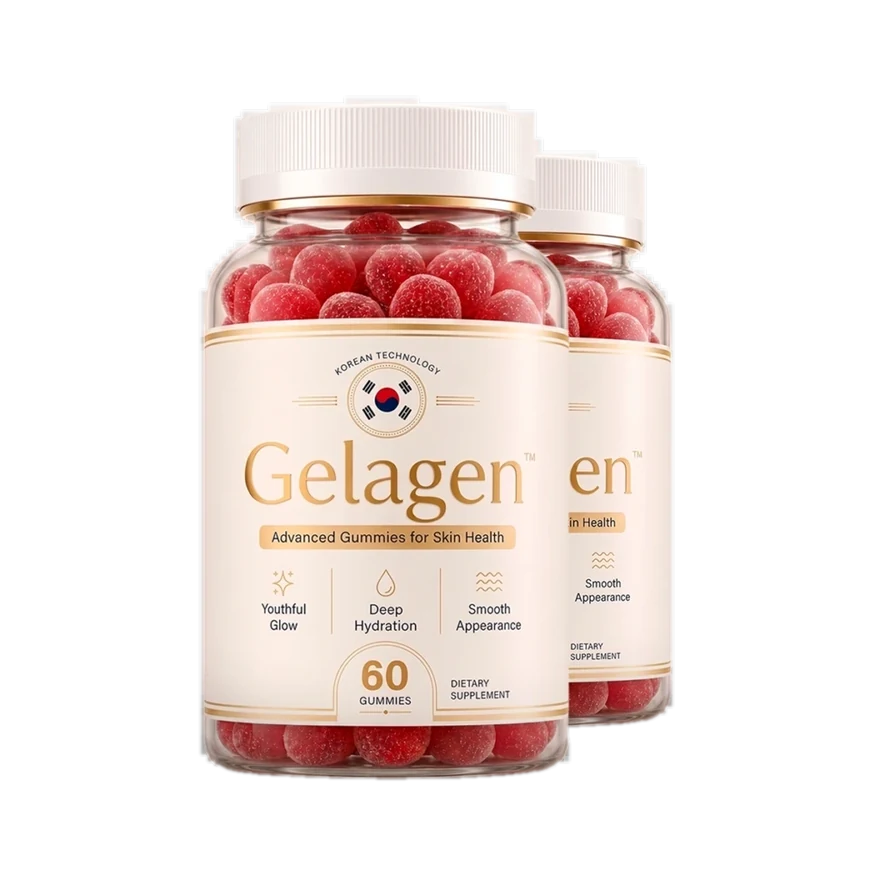
The Gelagen panel prints biotin at 5,000 mcg, and prints an amount beside every one of the other twelve entries as well.
Order GelagenWhat the trial record actually shows
Two things are true at the same time here, and pages selling biotin tend to print only the first of them.
The half that is settled
Biotin deficiency causes skin rashes, hair loss and brittle nails, and correcting a deficiency addresses them. Nobody disputes that. The catch is how uncommon the starting condition is in people eating normally, which turns the interesting question into a different one: what happens in everybody else.
The half that is thin
A 2017 systematic review of biotin for hair loss found eighteen reported cases in the entire literature, and in every single one the patient already had an underlying cause of poor hair or nail growth. Its own conclusion is that there is a lack of sufficient evidence for supplementation in healthy individuals.
A comparison of biotin’s popularity against its evidence published the same year is blunter. To that date there had been no clinical trial of biotin for alopecia of any kind, and no randomised trial of its effect on hair quality or quantity in humans. The accurate word for that is untested rather than disproven: nobody has run the study that would settle it either way.
The brittle-nail work ODS points to is small enough to quote outright. Nail thickness rose by 25 per cent in a series of eight patients and by 7 per cent in a series of fourteen, and the second of those differences was not statistically significant.
A 2022 review of how biotin behaves inside a laboratory assay says the same thing in one line while discussing something else entirely: in general, normal individuals do not get any benefit from taking a biotin supplement.
| Question | Where the evidence stands |
|---|---|
| Does deficiency cause hair and nail problems? | Yes. Skin rashes, hair loss and brittle nails are recorded signs of it. |
| Does correcting a deficiency help? | Yes, and this is the case biotin genuinely has. |
| Does more biotin help someone who is not short of it? | Not shown. Eighteen case reports, all with an underlying cause. |
| Has it been tested properly in healthy people? | No randomised trial of hair quality or quantity had been published as of 2017. |
Two reviews and one government fact sheet, all cited below. Read the rows together rather than picking one.
| How it is printed | What it tells you |
|---|---|
| An amount in micrograms | Exactly what you are taking. This is the version a buyer can act on. |
| A percentage of a Daily Value | The same thing, scaled. Large percentages look dramatic and say no more. |
| Named inside a blend with no figure | Nothing. The blend total is a ceiling, and biotin could be any fraction of it. |
The blood-test question, in full
This section is usually reported either as nothing at all or as an alarm, and it is neither. It is a narrow, well-documented measurement problem with a free solution.
A great many laboratory immunoassays are built on the binding between biotin and streptavidin. Biotin circulating in the blood competes with that chemistry, and the direction of the resulting error depends on the format of the test: competitive immunoassays read falsely high, and sandwich immunoassays read falsely low.
The JAMA study that measured this in healthy adults gave six people 10 mg of biotin a day for seven days and then ran 37 immunoassays. Nine of the 23 biotinylated assays were affected and none of the 14 non-biotinylated controls were. Five of eight competitive assays read high; four of fifteen sandwich assays read low.
Troponin, the blood test used to diagnose a heart attack, is a sandwich assay, so the error there runs in the direction that hides a problem rather than inventing one. FDA’s page on troponin assays states that biotin can significantly interfere with certain lab tests and cause incorrect test results which may go undetected, and that the agency has continued to receive adverse event reports indicating biotin interference caused falsely low troponin results. ODS records the worst documented outcome in plain words: a patient with a high intake of supplemental biotin died following a troponin test that gave a falsely low result.
The regulator’s position is current rather than historical. FDA’s final guidance to device makers, issued in October 2020, tells manufacturers how to test for biotin interference and how to report it to laboratories and clinicians.
Where this label sits, and where it does not
Every published human interference study starts at 10 mg a day. The single-dose thyroid finding ODS cites is a 10 mg dose. The case reports run from 10 mg to 300 mg. This label prints 5 mg, and nobody has published an interference study at 5 mg.
| The figure | What it is |
|---|---|
| 30 mcg a day | The Adequate Intake for an adult, and the Daily Value printed on labels. |
| 5,000 mcg | What this panel prints per two-gummy serving. Five milligrams. |
| 10 mg a day | The lowest amount at which interference has been demonstrated in healthy volunteers. |
| No upper limit | None has been set, because no human toxicity has been recorded. |
The gap between the second and third rows is the one thing this page will not fill in for you, because no published work fills it in either.
So both of these are true, and this website prints both: 5,000 mcg is about 167 times what an adult is judged to need, and it is half the lowest amount at which interference has actually been shown. Nothing on this page says a 5,000 mcg gummy will move a troponin result, because that has not been tested at this amount.
What closes the gap is not a study. It is one sentence, and it is free: tell whoever takes your blood that you take a biotin supplement. It does not depend on resolving the dose question, it lets the laboratory pick a method or a timing that is not affected, and interference is a measurement problem rather than a safety one, so it clears once you stop.
Gelagen is a vitamin and mineral gummy sold for skin, hair and nails. It is not a treatment for hair loss or for brittle nails, both of which are diagnosable conditions with several possible causes, and reading about a nutrient is not the same as having one of them looked at.
What to do with the number
Three things follow from everything above, and none of them asks you to believe anything the label has not printed.
- Say it before a blood draw. One sentence to the phlebotomist, and the question is handled. Nothing else on this page is as useful per word.
- Expect the most where you had the least. If you take a large biotin figure and nothing changes, the most likely explanation is that you were not short of it. That is a good result wearing the costume of a disappointing one.
- Count what else you take. Biotin sits in multivitamins, in hair gummies and in some protein powders. Two products add up in the body and neither label knows about the other.
None of that makes the figure a bad one. A panel that prints 5,000 mcg in digits has given you enough to run every check on this page, and one that hides the same nutrient inside a blend total has given you none of them.
Five milligrams of biotin is a large, legal, printed amount with a thin evidence base behind it in people who are not deficient, and one free precaution attached to it. Read it that way and the panel becomes easy to judge.
The other twelve entries are a separate question, and a more cheerful one, because several of them sit at amounts an ordinary adult can actually use. All thirteen are set against their reference intakes here, and the ingredients page reproduces the panel in label order.
Sources
- U.S. Food and Drug Administration, writing as “Biotin Interference with Troponin Lab Tests - Assays Subject to Biotin Interference” (Center for Devices and Radiological Health; Content current as of 21 June 2022) · read it at fda.gov
- U.S. Food and Drug Administration, writing as “Testing for Biotin Interference in In Vitro Diagnostic Devices: Guidance for Industry” (Final guidance, October 2020; Docket FDA-2019-D-1876; Center for Biologics Evaluation and Research and Center for Devices and Radiological Health) · read it at fda.gov
- NIH Office of Dietary Supplements, writing as “Biotin: Fact Sheet for Health Professionals” · read it at ods.od.nih.gov
- Li D, Radulescu A, Shrestha RT, Root M, Karger AB, Killeen AA, Hodges JS, Fan SL, Ferguson A, Garg U, Sokoll LJ, Burmeister LA, writing as “Association of Biotin Ingestion With Performance of Hormone and Nonhormone Assays in Healthy Adults” (JAMA; 2017;318(12):1150-1160; Erratum in: JAMA; 2017;318(19):1937) · read it at pubmed.ncbi.nlm.nih.gov
- Dasgupta A, writing as “Immunoassay design and biotin interference” (Adv Clin Chem; 2022;109:165-183) · read it at pubmed.ncbi.nlm.nih.gov
- Patel DP, Swink SM, Castelo-Soccio L, writing as “A Review of the Use of Biotin for Hair Loss” (Skin Appendage Disord; 2017;3(3):166-169) · read it at pubmed.ncbi.nlm.nih.gov
- Soleymani T, Lo Sicco K, Shapiro J, writing as “The Infatuation With Biotin Supplementation: Is There Truth Behind Its Rising Popularity? A Comparative Analysis of Clinical Efficacy versus Social Popularity” (J Drugs Dermatol; 2017;16(5):496-500) · read it at pubmed.ncbi.nlm.nih.gov
Order Gelagen on the official website
Thirteen printed amounts, two gummies a day, and 60 days from the date of purchase to decide.
$79 down to $49 a bottle · money back for 60 days after you buy
Order Gelagen On The Official WebsitePaid at the seller’s checkout · 60-day money-back guarantee · lot GEL-26/GE-6615